The Core for
AI Optimization
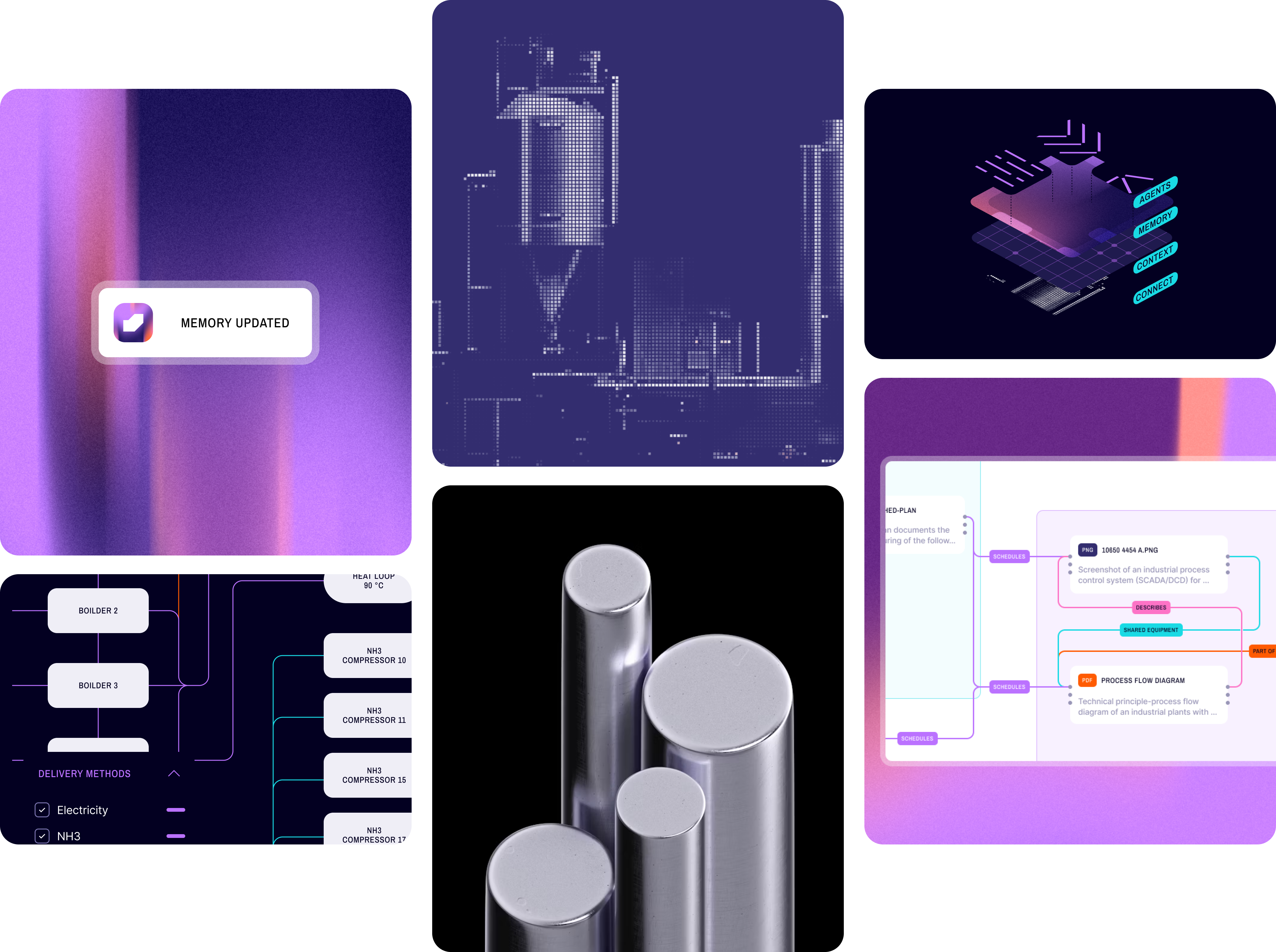


Share company context
across your team
 company model

Capture your best
people's know-how
knowledge base
You don’t need perfect data to get started





Start with the data you already have
Enterprise-grade security by default
We answer your most
common questions
Juna's AI takes on specific business tasks, like optimizing settings, monitoring processes, running root-cause investigations, generating reports, and optimizing resource usage.
It continuously observes the company, evaluates tradeoffs, and acts within defined objectives and constraints. Unlike dashboards or static tools, the AI operates continuously and adapts as reality changes.
No. Juna is built with human-in-the-loop by design.
The AI recommends actions, updates plans, and optimizes decisions. But you always define objectives, constraints, and guardrails, and you decide what can be automated and what requires approval. Your team keeps the final say.
Juna connects directly to your existing landscape: ERP, CRM, databases, data warehouses, and SaaS tools.
You don’t need to replace systems or clean all your data upfront. Juna builds a semantic layer on top of existing sources, validates data during integration, and works with the data you already have.
No.
Most companies don’t have perfect data, and Juna is built for that reality. The system combines live data, historical data, domain knowledge, and learned behavior. You can start small and expand coverage as data quality improves.
Data security is core to how the platform is built.
Juna is ISO 27001 certified, fully GDPR-compliant, and runs isolated customer environments hosted in Germany. Data is never shared across customers, access is strictly controlled, and all integrations follow enterprise security standards
You’re not left alone.
Juna provides hands-on onboarding, technical support, and continuous collaboration. Our team supports integration, model validation, rollout, and ongoing optimization and stays involved as your use cases expand.
Most customers start with a focused Proof of Value.
We connect a limited set of systems, model a real business problem, and demonstrate measurable impact within weeks. From there, customers scale AI, teams, and use cases step by step.
Yes.
Each use case delivers value on its own. Many customers start with planning, process optimization, or cost and expand later. The AI OS ensures everything stays compatible as you scale.
No.
Juna operates on top of your existing systems. There’s no need to replace tools, databases, or workflows. Setup runs without disrupting live operations.
Initial results typically appear within weeks, not months.
A focused Proof of Value demonstrates impact quickly. From there, customers expand to additional teams, departments, or use cases at their own pace.
Juna significantly reduces the risk of hallucinations.
Every answer is grounded in your Company Model, Knowledge Base, and Memory, the verified context of your business.
The AI executes code against real data rather than guessing from general knowledge, and every step of the reasoning is inspectable.
No system incorporating generative AI can guarantee absolutely zero inaccuracies in the answers, which is why a human stays in the loop to review before anything is acted on.
No.
Juna runs on enterprise commercial terms, where providers are contractually prohibited from training on your data. This matters because training is the main route by which sensitive data leaks into an AI system and can resurface elsewhere, so closing it off protects your company's IP
Yes. Within the guardrails that you set and control, the AI can create tickets in your systems, push reports to Teams and email, update plans, and more
Yes. Existing ML models, forecasts, and simulations can be added as tools to the platform.
The AI calls them alongside Juna's native tools inside the same reasoning loop. Your existing investments stay in use, they just become accessible to every team member.
No. The knowledge graph is accessible via open APIs, the platform ships with an SDK for your own tools, and customers own everything they generate on the platform, including code, AI workflows, and analyses. Your knowledge stays with you.
You do. All code, workflows, analyses, and reports generated through the platform belong to the customer.