Introducing Juna’s Agentic Factory OS: The AI Platform to get more out of your factory

The AI Platform to get more out of your factory
Juna launches its Agentic Factory OS — an agentic operating system for industrial production, powered by autonomous AI agents that that plan, steer, and improve industrial processes to help manufacturers maximize output, sustainability and profits.
Today, we're announcing the Agentic Factory OS: the most ambitious step we've taken since founding this company. It marks a new era for industrial production: one where operations are no longer reactive and manual, but proactive and autonomous, powered by AI agents that work alongside your team, 24/7.
Two years ago, we set out with a clear conviction: heavy industry can become radically more efficient, more profitable, and more sustainable at the same time. That conviction hasn't changed. What has changed is the scope of what's now possible. With the Agentic Factory OS, we're extending that mission beyond heavy industry to every manufacturer ready to build their production for the future. A future, where the imagination of operators and production managers is the only limit to what their factory can do. Where the systems they work with don't slow them down, but amplify them. As copilots, decision engines, and tireless analysts.
Juna is the foundation for that future.
The Operational Reality
Every factory runs on thousands of decisions every day. Which orders to schedule first. How to adjust a process when input quality shifts. When to ramp energy up or down. How to react when a machine underperforms or a supplier delivers late.
Most of these decisions are made by experienced people, under time pressure, with incomplete information, using tools from a different era. Planning happens in spreadsheets. Process adjustments rely on gut feeling. Energy consumption is reviewed monthly, not in real time. The data exists, scattered across sensors, historians, SCADA, MES, and ERP, but it rarely comes together in time to drive the best outcome.
The result: a persistent gap between how a factory operates and how it could operate. A carbon black manufacturer leaving throughput on the table. A dairy producer running suboptimal parameters because the knowledge lives in a few senior operators' heads. An ice cream producer overspending on energy because consumption isn't visible in real time. A cement factory where engineers spend days on analyses that should take minutes. A few percentage points of improvement in throughput, yield, or energy consumption translate into millions in bottom-line impact — and the opportunity compounds across every shift, every line, every plant.
Why Now
Three structural forces make this work urgent.
Knowledge at risk. Across Europe, an entire generation of experienced operators is approaching retirement. The intuition for how a kiln behaves in winter, the unwritten scheduling rules, the feel for a drifting process — largely undocumented. When these people leave, the knowledge leaves with them. Juna's agents capture that expertise and make it available 24/7. The factory gets smarter over time, not more fragile.
Margins under pressure. Energy costs, raw material volatility, regulation, global competition — the pressure is constant. The answer isn't submitting or closing down. It's operating smarter: more output from the same resources, less waste, faster decisions. Not through one-time consulting projects, but through continuous, compounding improvement.
Sustainability as operational outcome. When you optimize energy consumption, reduce waste, and improve yield, you simultaneously reduce your environmental footprint. Every Juna optimization targets economic and ecological performance together.
We believe industry in Europe should remain competitive not through subsidies, but through technological leadership. Juna 2.0 is our contribution to that vision.
Introducing the Agentic Factory OS
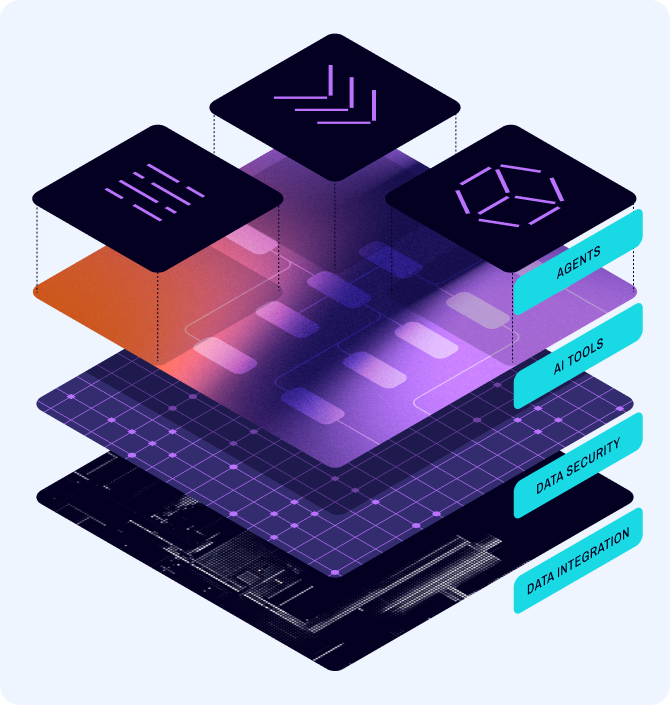
The Agentic Factory OS is an AI platform that orchestrates AI agents to plan, steer, and continuously improve industrial processes. It's not a dashboard. It's not a point solution. It's an operating layer for AI in the factory: a shared foundation on which multiple specialized agents run in coordination, following the same rules, acting on real factory conditions, and always under human control.
Connecting the Factory: Data Integration Done Right
Factories run on fragmented data. Sensor streams, PLC signals, SCADA systems, process historians, MES workflows, ERP transactions — the information is there, but it's scattered across dozens of systems that were never designed to talk to each other.
Juna connects all of it. Through native integrations, we unify every signal into a single semantic layer, forming a consistent, contextualized representation of your entire operation. Our integration framework and engineering team handle the heavy lifting. You focus on operations, not on data plumbing.
And we take data security seriously. Juna is built on an enterprise-grade, compliance-ready architecture: ISO 27001 certified, fully GDPR compliant, and designed for strict data isolation. Every customer environment runs on dedicated servers hosted in Germany, ensuring clear separation, controlled access, and full data sovereignty.
Orchestration: One Foundation, Many Agents
The Agentic Factory OS is the shared operating layer that makes coordination possible. Instead of deploying isolated tools for scheduling, control, and analytics, multiple specialized agents run on the same foundation. They share context. They respect the same constraints. They act on the same real-time data. And critically, they're transparent: every decision can be traced, every action can be overridden.
The result is scalable, auditable, and human-controlled optimization.
Build Your Own: The Agent Builder
We develop in-house highly sophisticated agents for complex tasks like production scheduling and process control. But we also believe that the people closest to the operation should be empowered to build their own.
The Agent Builder lets your teams design, deploy, and scale operational AI agents in self-service. You define the objective, the constraints, and the guardrails. The underlying Agent SDK orchestrates the required models, tools, and workflows — even across complex, multi-step decisions. Think of it as giving your best process engineers a 24/7 AI workforce they can direct themselves: agents that monitor your factory around the clock, detect inefficiencies, analyze root causes, generate recommendations, and automate routine tasks.
The Agents: Your Factory's New Operating Team
The Agentic Factory OS ships with a set of purpose-built agents, each designed to take on a core function in production. They operate as persistent, always-on copilots — not tools you open when you have a question, but systems that proactively optimize, alert, and act. Together, they form a coordinated layer of intelligence across your entire operation.
Production Scheduling Agent
Production scheduling is one of the highest-leverage problems in manufacturing and one of the hardest to solve well. It involves balancing competing objectives across dozens of constraints that shift constantly: order priorities, machine availability, changeover times, material supply, delivery deadlines, and workforce capacity.
The Production Scheduling Agent generates continuously optimized production plans that maximize throughput, asset utilization, on-time-in-full delivery, and profitability. It doesn't just create a plan once and wait for the next planning cycle. It adapts in real time — reacting to disruptions, rebalancing priorities, and surfacing trade-offs so planners can make informed decisions fast.
For planners, this means moving from hours of manual rework every time something changes to a system that proposes the best response in seconds. For the business, it means fewer missed deadlines, higher machine utilization, and plans that reflect the actual state of the factory — not yesterday's assumptions.
Process Engineering Agent
Running a production process at its optimum is a moving target. Raw material properties change. Ambient conditions shift. Equipment ages. The settings that worked yesterday may not be optimal today.
The Process Engineering Agent continuously optimizes machine settings and process parameters to maximize yield, throughput, and energy efficiency. It learns from historical patterns, monitors live conditions, and adjusts recommendations as the process evolves — turning expert intuition into systematic, repeatable performance.
In practice, this means tighter quality bands, fewer off-spec batches, lower energy consumption per unit, and a process that performs at its best regardless of who's on shift. The knowledge of your most experienced operator doesn't go home at the end of the day. It stays in the system.
Resource Intelligence Agent
Understanding the true flow of resources through a factory — from raw materials to finished products — is surprisingly difficult. Losses hide in transitions. Inefficiencies accumulate across shifts. Waste goes unnoticed until the monthly report.
The Resource Intelligence Agent provides real-time visibility into the transformation from inputs to outputs. It identifies waste, flags inefficiencies, and highlights opportunities to boost performance — before they show up in the P&L.
Background Agents
Some of the most valuable agents are the ones that quietly handle the tasks no one has time for: monitoring KPIs against thresholds, generating shift reports, cross-referencing quality data with process conditions, or alerting teams when patterns emerge that deserve attention.
With the Agent Builder, you can define and deploy any number of background agents tailored to your specific operation. They run continuously, act on the rules you set, and surface insights when they matter — not after the fact.
Factory Chat: Talk to Your Factory
Beyond agents that act, Juna 2.0 introduces a fundamentally new way to interact with your production data.
Factory Chat turns your factory into a system you can talk to. Operators and managers get instant, natural-language access to live and historical production data. No more digging through dashboards. No more waiting for someone to pull a report. No more navigating five different systems to answer one question.
Ask "What caused the yield drop on Line 3 last night?" and get an answer that correlates process parameters, raw material changes, and equipment events — in seconds. Ask "How does our energy consumption this week compare to last month?" and see a contextualized breakdown by line, by product, by shift. Ask "Which orders are at risk of missing their delivery date?" and get a prioritized list with root causes and recommended actions.
It's not a chatbot. It's a production-aware intelligence layer that understands your factory's context, terminology, and structure. Factory Chat makes your operation legible to everyone — from the operator on the floor to the plant manager reviewing performance.
What Comes Next
The Agentic Factory OS is the beginning of a platform that will grow with every deployment, every integration, and every agent built on top of it. Our roadmap is guided by a simple principle: move the boundary of what factories can do with AI, and do it in a way that keeps humans in control.
In the near term, we're focused on expanding the library of pre-built agents, deepening integrations with common industrial systems, and making the Agent Builder accessible to teams without AI expertise. Longer term, we see factories where agents don't just optimize individual processes but coordinate across the entire production floor in real time.
We're working with manufacturers across industries who share our belief that the future of production is autonomous, adaptive, and sustainable. If that resonates with you, we'd love to talk.
The factory of the future won't be defined by the machines on its floor. It will be defined by the intelligence in its systems. With Juna, that future starts today.
About Juna AI
Juna AI is a Berlin-based technology company building the Agentic Factory OS — an AI platform that orchestrates Agents that plan, steer, and improve industrial processes in real time. Founded by Matthias Auf der Mauer and Christian von Hardenberg, Juna AI enables manufacturers to operate complex factories with greater autonomy, better margins, and a smaller environmental footprint. Juna's systems are deployed across multiple industrial sectors, delivering measurable economic and sustainability impact.